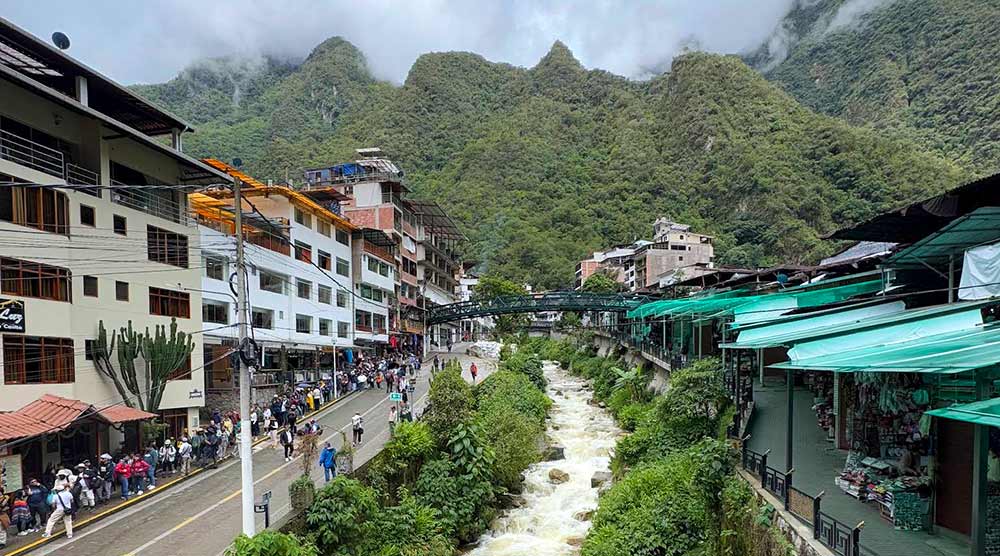
The route from Cusco to the town of Aguas Calientes
The train journey is the way most tourists travel from Cusco to the town of Aguas Calientes. However, there is another option: the long and adventurous 8-hour journey known as the Hydroelectric or Amazon route.
However, for comfort, speed, and shorter travel time, most tourists prefer the train. From Cusco, the train can be taken from several stations, with Ollantaytambo being the most popular as it offers the highest number of daily departures across different train services.
To take the train, tickets must be purchased online via the Peru Rail or Inca Rail websites. Tourist services range from $30 up to $400–$500 for luxury trains. All offer maximum comfort and onboard service. Some even include a gourmet lunch or dinner.
On travel day, you first take a bus from Cusco to the Ollantaytambo train station. You can go using your train ticket with an extra fee (Bimodal service) or via public transport in minivans departing from Pavitos street (costing 12 soles).
In Ollantaytambo, you must take the train at the exact scheduled time, so it is recommended to arrive 30 minutes early. The train ride lasts about 1 hour and 45 minutes. The journey ends at the Aguas Calientes train station, just 10 kilometers from the entrance to the Machu Picchu archaeological site.
💡 How to buy the Machu Picchu entrance ticket? – The Machu Picchu entrance ticket is very important because, depending on your entry time, you purchase the train and bus tickets to the Inca site. Bus tickets can be purchased on the travel day. The Machu Picchu entrance ticket, however, must be bought online 2–3 months in advance. Otherwise, availability may run out. There are ten types of tickets, each granting access to one of the three circuits at the archaeological site. Some include a hike to a distant mountain or structure. Machu Picchu visiting hours are from 6 am to 5 pm, and tourists must select their entry time (e.g., 6 am, 7 am, or 8 am).
Buying Machu Picchu entrance and bus tickets
Before purchasing train and bus tickets, it is recommended to get the Machu Picchu entrance ticket first.
These tickets have limited availability. Around five thousand people enter Machu Picchu daily. If you don’t buy in advance, you risk finding no tickets available.
The entrance ticket is sold through the official website of the Peruvian Ministry of Culture. Another option is to buy through a travel agency website offering ticket sales.
Tickets can also be purchased in person at the sales offices in Cusco (Garcilaso and Maruri streets) or in Aguas Calientes (Pachacútec Avenue). However, buying online is always the safest option to secure tickets.
Here are the ten available ticket types:
- Machu Picchu Classic Photo Ticket.
- Machu Picchu Classic Lower Terrace Ticket.
- Machu Picchu Lower Temples Ticket.
- Machu Picchu with Huayna Picchu Ticket.
- Machu Picchu with Mountain Ticket.
- Machu Picchu with Huchuy Picchu Ticket.
- Machu Picchu with Inca Bridge Ticket.
- Machu Picchu with Intipunku Ticket.
- Machu Picchu with Great Cavern Ticket.
After securing the entrance ticket, it’s time to buy train and bus tickets to the Inca city. Train tickets can be purchased through the Peru Rail or Inca Rail websites.
The train departure time should match your Machu Picchu entry ticket. Trains depart promptly, and availability is limited, so tickets should be purchased 1–2 months in advance.
Next, bus tickets to Machu Picchu can be purchased. Unlike the entrance ticket and train tickets, bus tickets are widely available and can even be bought in person on the day of the visit.
Walk or take the bus to Machu Picchu?
Taking the bus from Aguas Calientes to Machu Picchu isn’t the only option. You can also hike. Walking is free for all, requiring only a Machu Picchu entry ticket and plenty of energy, as the trail is challenging.
The hike from Aguas Calientes to Machu Picchu is 8 kilometers, mostly uphill.
The first section starts from the town along descending paths to the Ruinas bridge, which crosses the Vilcanota River. The trail then becomes difficult, ascending hundreds of stone steps up to the Machu Picchu entrance. An average tourist completes this route in about 2 hours.
The return journey after visiting Machu Picchu can also be done by bus or on foot, descending the hundreds of stone steps.
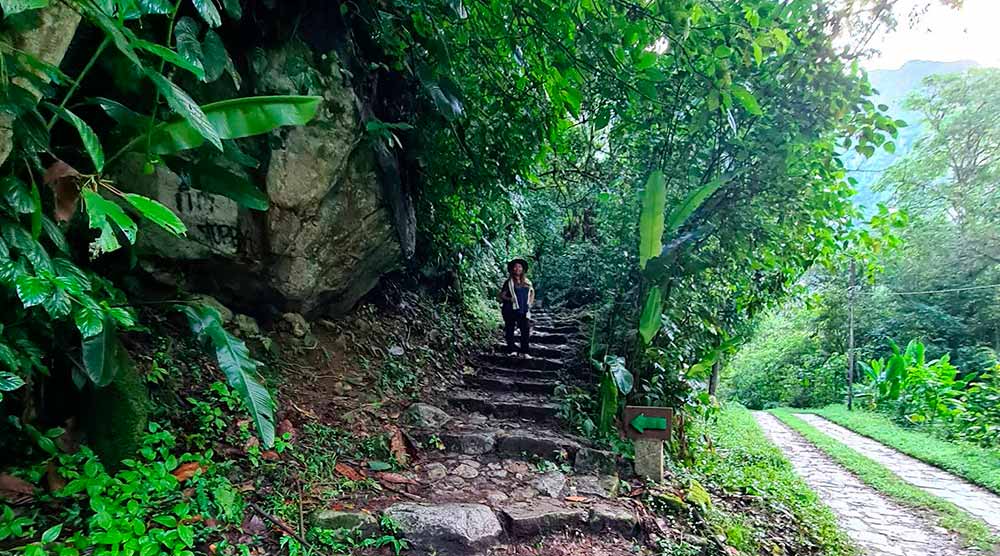
The return trip from Machu Picchu to Aguas Calientes
A visit to Machu Picchu can last from 1 to 6 hours, depending on the type of ticket chosen. All tickets allow access to one of the three available circuits:
- Circuit 1 – This circuit covers the main platform, including the Caretaker’s House. It typically takes 1 hour to complete.
- Circuit 2 – This circuit explores the main constructions in the middle and upper parts of Machu Picchu, including the Temple of the Sun, Main Temple, Temple of the Three Windows, Sacred Rock, Water Mirrors, and more. It typically takes 2 hours 30 minutes.
- Circuit 3 – This circuit visits the lower temples of Machu Picchu, including the Royal Tomb, Temple of the Sun, Inca House, Three Doorways, Sacred Rock, Condor Temple, and more. It typically takes 2 hours.
Some tickets also include hikes to high mountains or distant constructions within the Inca city, which extends the duration of the visit.
After touring the Inca city, due to fatigue from walking the circuit, most tourists prefer to return by bus to Aguas Calientes.
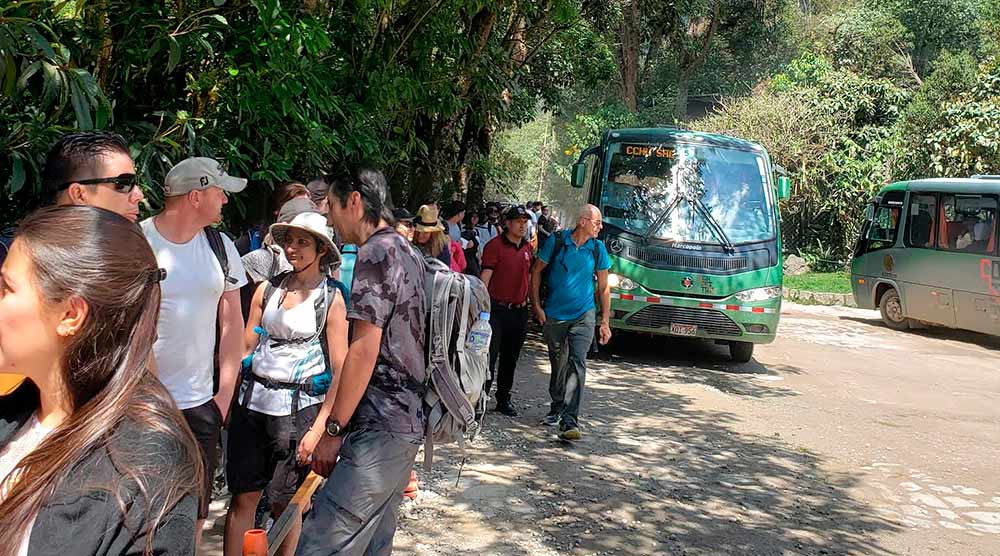
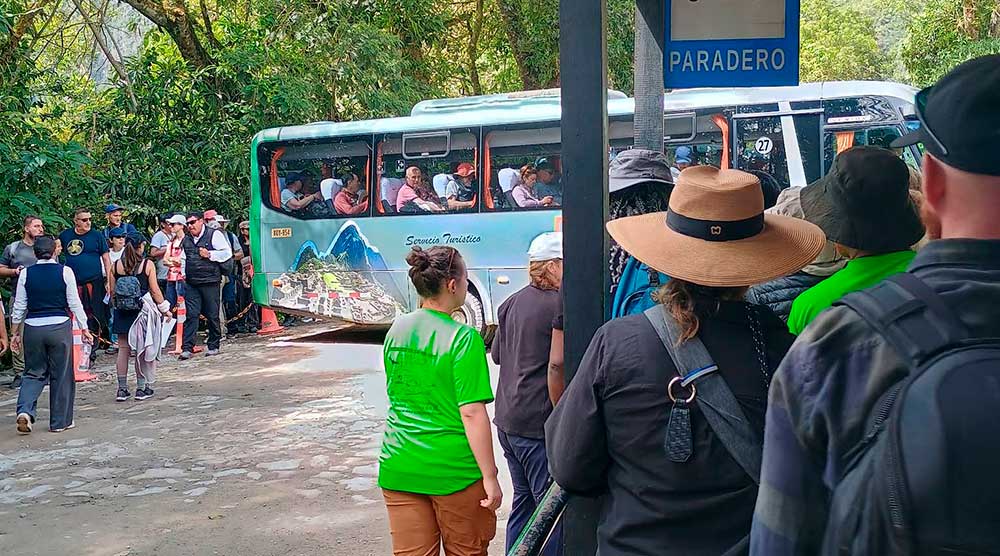
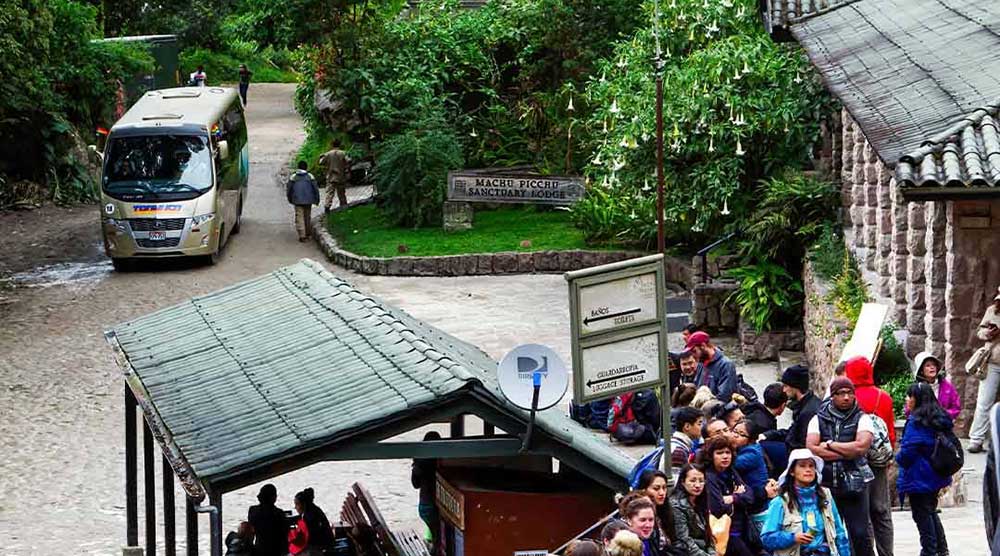
The bus ride takes 30 minutes. Tickets can be purchased at the Machu Picchu exit gate. During peak tourist seasons, queues can form for the bus, taking 5 to 20 minutes.
Tourists in good physical shape, with enough time to catch their return train to Cusco, may choose to walk back to Aguas Calientes. This return hike takes about 1 hour 40 minutes on average.
The route from Aguas Calientes back to Cusco city
In Aguas Calientes, tourists can enjoy lunch and stroll through the charming streets before boarding the return train.
The train journey, as on the outbound route, stops at several stations, with Ollantaytambo being the most popular due to more frequent daily departures.
The tourist train from Aguas Calientes to Ollantaytambo takes about 1 hour 45 minutes. From there, a bus or tourist minivan takes visitors back to Cusco, also in about 1 hour 45 minutes.
This bus can be taken as public transport or included with the train ticket (Bimodal service). Upon arrival in Cusco, the Machu Picchu adventure concludes.
Frequently Asked Questions
1. How many kilometers is the bus route to Machu Picchu?
The bus route to Machu Picchu is 10 kilometers starting from the town of Aguas Calientes.
2. Does the train take me directly to the entrance of Machu Picchu?
No, trains take tourists from various stations in Cusco or the Sacred Valley to the final station in Aguas Calientes, also called Machu Picchu town, just 10 kilometers from the archaeological site.
3. Can I walk to the entrance of Machu Picchu?
Yes, the walking trail from Aguas Calientes to Machu Picchu is 8 kilometers and free for all visitors.
4. Can I buy the bus ticket in Aguas Calientes town?
Yes, bus tickets can be purchased in Aguas Calientes town (Hermanos Ayar Avenue s/n).
5. Can I buy the bus ticket at the Machu Picchu exit gate?
Yes, the return bus ticket from Machu Picchu to Aguas Calientes can be purchased at the exit gate of the archaeological site.
6. Can I buy the Machu Picchu bus ticket online?
Yes, Machu Picchu bus tickets can be purchased online. It’s recommended to buy the Machu Picchu entrance ticket and the train ticket to Aguas Calientes first.
7. How long does it take to walk from Aguas Calientes to Machu Picchu entrance?
The walk from Aguas Calientes to the Machu Picchu entrance is 8 kilometers uphill and takes about 2 hours for an average tourist.
8. Can I buy train and bus tickets to Machu Picchu online?
Yes, train and bus tickets to Machu Picchu can be purchased online. It’s recommended to buy the entrance ticket first.
9. Is it very difficult to hike up to Machu Picchu?
The trail from Aguas Calientes to Machu Picchu is considered challenging.
10. How much is the bus ticket to Machu Picchu entrance?
The bus ticket costs $12 per trip ($24 round trip) for foreign adult tourists.